
AI Social Startups and the Next Network Boom
 Vortixel
17 minutes read
Vortixel
17 minutes read
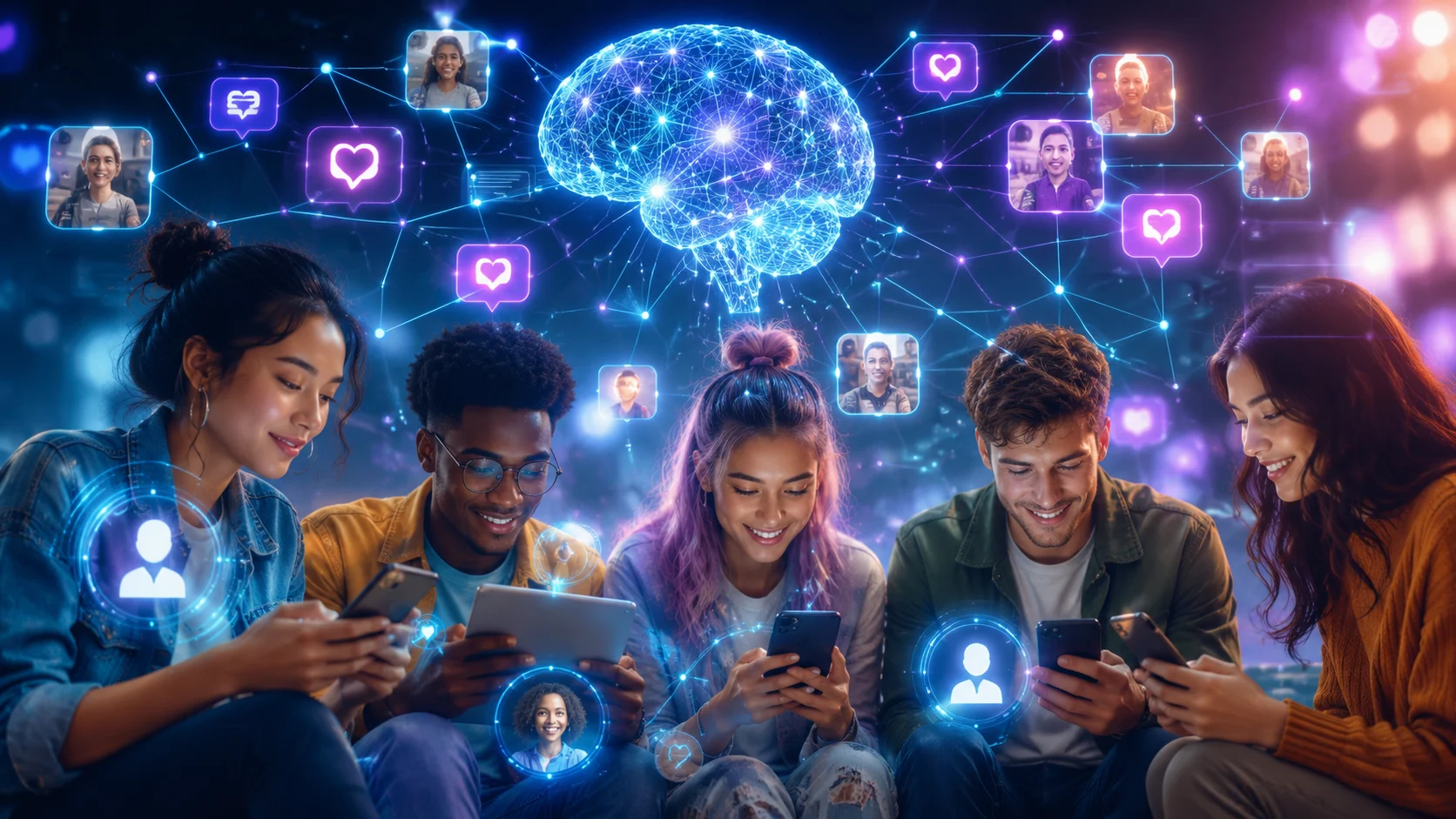
The next social network probably will not look like the last one, and that is exactly why AI social startups are suddenly becoming one of the most interesting corners of consumer tech. For more than a decade, the internet’s social map has been dominated by giant feeds, follower counts, short videos, creator economies, and algorithmic attention loops. But the mood is shifting as users get tired of performing for strangers, swiping through recycled content, and treating every app like a public stage. A new wave of founders is betting that artificial intelligence can make digital connection feel smaller, smarter, more useful, and maybe even more human. Instead of chasing another endless feed, these startups are trying to build the next network boom around context, companionship, identity, creativity, and real relationships.
The timing feels unusually sharp because the social internet is stuck in a strange in-between era. People still spend a massive part of their lives inside social apps, but many no longer describe those spaces as fun, fresh, or intimate. The biggest platforms are powerful, but they often feel crowded, optimized, and emotionally exhausting. Younger users in particular have learned to split their identities across close-friends apps, group chats, private communities, anonymous spaces, professional networks, and niche creative tools. That fragmentation creates an opening for AI social startups to rethink what a network should do when attention alone is no longer enough.
Why AI Social Startups Are Getting Attention
The core pitch behind AI social startups is not simply that artificial intelligence can generate posts, captions, avatars, or chat replies. That layer is already everywhere, and by itself it does not create a durable network. The deeper idea is that AI can help solve the cold-start problem that has haunted social products for years. A new social app is only valuable when people find the right people, conversations, communities, or moments quickly enough to come back. AI gives founders a way to make an empty room feel alive before the network has fully formed.
That matters because consumer social products are brutally hard to launch. A productivity app can save one person time on day one, but a social app usually needs other people to be useful. The classic network effect rewards incumbents because users go where their friends, favorite creators, audiences, and memories already are. AI changes that math a little by acting as a matchmaker, creative partner, conversation starter, taste engine, or social coach. It cannot replace real people, but it can make the path toward real people shorter, less awkward, and more personalized.
This is why venture capital interest has started to move beyond generic AI infrastructure and into consumer behavior. Infrastructure is still massive, but investors know that the biggest tech companies are usually born when a new technology rewires daily habits. Search changed how people found information, smartphones changed where people lived online, and social feeds changed how culture moved. The question now is whether AI can change how people meet, share, flirt, collaborate, learn, and belong. If the answer is yes, then AI social startups are not just another trend; they are early experiments in the next version of online life.
The Problem With Today’s Social Internet
The current social internet has a vibe problem, not just a product problem. Many platforms are technically stronger than ever, with better recommendation systems, smoother video tools, stronger creator monetization, and global reach. But a lot of users now feel like the bargain has changed. They enter an app for connection and leave with comparison, noise, outrage, ads, or a weird sense that they performed for an algorithm instead of participating in a community. That emotional gap is exactly where new social products usually begin to breathe.
For founders, the opportunity is not to declare that legacy platforms are dead, because they clearly are not. The smarter observation is that the largest platforms have become too broad to satisfy every emerging behavior. A teenager sharing a low-pressure update with five friends does not need the same product as a creator managing a public brand. A founder looking for professional collaboration does not need the same environment as someone searching for a romantic connection. AI social startups can win by choosing one emotional job and making it feel dramatically better than the default feed.
There is also a growing fatigue with passive consumption. The short-video era trained users to scroll with incredible speed, but it also created a kind of cultural sameness. Trends spread fast, content formats copy each other, and personal expression can feel boxed into templates. AI introduces a different kind of interaction because it can respond, remix, personalize, and guide. That makes it useful for startups trying to move social apps from pure consumption toward co-creation, assisted conversation, and more intentional discovery.
From Feeds to Contextual Connection
The next network boom may not be built around who has the most followers. It may be built around who understands context better. In older social apps, discovery often depends on explicit signals such as following someone, liking a post, joining a group, or watching a certain type of video. AI can work with softer signals, including intent, mood, location, taste, schedule, goals, social history, and conversational patterns. That creates room for social products that feel less like broadcasting machines and more like living maps of personal relevance.
Imagine a social app that does not ask users to manually build a profile from scratch, but gradually understands what kind of people, events, communities, or conversations actually matter to them. It could recommend a new friend because both users are trying to learn the same skill, not because they followed the same influencer. It could suggest a local gathering because it understands a user’s taste, calendar rhythm, and comfort level. It could help someone write a better message without turning them into a fake version of themselves. This is the direction many AI social startups are exploring, even when their products look very different on the surface.
Contextual connection is powerful because social pain points are often subtle. People do not only want more contacts; they want the right contact at the right moment. They do not only want more messages; they want messages that feel worth answering. They do not only want content recommendations; they want a sense that the digital world is reflecting their actual life instead of pulling them away from it. AI can help with that, but only if founders treat personalization as a trust exercise rather than a growth hack.
Dating, Friendship, and the Loneliness Market
One of the clearest areas for AI social startups is the messy, emotional world of dating and friendship. Traditional dating apps created a huge market by making romantic discovery searchable, swipable, and mobile. But years of swipe fatigue have made many users skeptical of products that turn people into cards. The new generation of social founders is trying to build tools that understand compatibility more deeply than a few photos and prompts. AI can help with matching, conversation coaching, relationship reflection, safety checks, and even post-date feedback if it is designed with care.
The same logic applies to friendship, which may be an even larger and more underrated market. Adults often struggle to make new friends after school, relocation, career changes, breakups, parenthood, or major life transitions. Existing social platforms show people plenty of content, but they do not always help them create new bonds in a practical way. An AI-powered friendship app could detect shared routines, suggest low-pressure meetups, introduce compatible groups, or help users maintain relationships they already care about. The product challenge is to support real connection without making users feel analyzed, manipulated, or emotionally outsourced.
The loneliness economy is sensitive because the stakes are human, not just financial. A startup can use AI to reduce awkwardness, but it should not exploit vulnerability. A product can help someone express themselves, but it should not replace consent, authenticity, or emotional labor. Users will quickly reject apps that feel creepy, invasive, or too synthetic. The winners in this category will likely be the companies that make AI feel like quiet support in the background rather than a loud personality standing between people.
Vibe Coding and the New Founder Advantage
Another reason AI social startups are moving fast is that the cost of building prototypes has dropped. Vibe coding, AI-assisted design tools, no-code systems, and agentic development workflows are letting small teams test consumer ideas with fewer engineers than before. That does not mean building a great product is easy, because distribution, retention, safety, and taste are still incredibly hard. But it does mean more founders can reach the first version of an app before they raise a large round or hire a full technical team. In consumer social, that speed matters because timing and cultural instinct often decide whether a product feels alive.
This shift changes what investors may look for in early-stage teams. Technical skill still matters, especially when products require strong AI infrastructure, privacy controls, moderation systems, and scalable architecture. But product taste, community intuition, storytelling, and a deep understanding of user behavior are becoming more important. A founder who understands why a certain generation feels bored, lonely, overexposed, or creatively blocked may have an edge over a team that only knows how to ship features. In this part of the market, cultural insight is not decoration; it is the product strategy.
For Startup Vortixel readers, this is where the trend becomes especially practical. The rise of AI does not remove the need for classic startup discipline. Founders still need a sharp wedge, a clear user segment, a retention loop, a believable business model, and a reason people invite others. What AI changes is the speed at which those assumptions can be tested. A tiny team can now build, launch, learn, and pivot faster, but that only helps if the team is honest about what users actually do after the novelty fades.
The New Social Graph Is Interest, Intent, and Identity
For years, the social graph was mostly about known relationships. You followed friends, classmates, coworkers, celebrities, creators, and brands. Then the interest graph took over, especially with recommendation-driven video feeds that cared less about who you knew and more about what kept you watching. Now AI is pushing social products toward a more fluid graph built from interest, intent, identity, and context. This gives AI social startups a chance to create networks that are less dependent on importing a user’s existing friend list.
An intent-based network can be powerful because people often enter apps with a goal, even when they do not say it directly. Someone may want to find a cofounder, improve their style, meet people in a new city, join a book club, build a creative portfolio, or understand a niche topic. Instead of forcing users to search manually, an AI-native social product can guide them toward people and spaces that match that goal. The experience becomes less like scrolling through a mall and more like walking into a room where the right conversation is already starting. That is a much stronger promise than simply showing another feed.
Identity also becomes more flexible in this model. Legacy platforms often make users choose between public performance and private lurking. AI-native products can support softer forms of expression, such as assisted journaling, semi-private updates, collaborative mood boards, anonymous questions, AI-generated icebreakers, or adaptive profiles that change depending on the context. This could unlock more participation from users who do not want to become creators but still want to be seen. The best social apps have always lowered the pressure to participate, and AI gives startups new ways to do that.
Monetization Beyond Ads and Influencers
The business model question is one of the hardest parts of the AI social startups story. Traditional social networks often grow first and monetize later through ads, creators, commerce, subscriptions, or data-driven targeting. AI products can be more expensive to run because every intelligent interaction may carry compute costs. That means founders cannot casually promise free unlimited personalization forever unless they have a credible path to efficiency. The economics of AI social products will shape which ideas survive after the hype cycle cools down.
Subscriptions may become more common in this category because users might pay for products that improve relationships, dating outcomes, professional networking, creativity, or emotional organization. A person may not pay for another random feed, but they might pay for a tool that helps them meet better people, maintain important friendships, or grow a useful network. Freemium models can also work if the free layer creates habit and the paid layer unlocks deeper personalization. The challenge is making paid features feel like genuine value instead of artificial limitation. If AI becomes the core utility, pricing has to feel aligned with trust.
Commerce and marketplace models are another possibility. A social-mapping app could connect users to local events, venues, classes, or communities. A professional social startup could monetize recruiting, introductions, expert networks, or project matching. A creator-focused AI social platform could build tools for collaboration, licensing, fan engagement, and paid experiences. The key is that monetization should come from strengthening the network, not interrupting it. Once a social app feels like it is selling attention instead of improving connection, users become skeptical fast.
Trust, Privacy, and the Creepy Line
No discussion of AI social startups is complete without talking about trust. Social products already handle sensitive information, and AI can make that sensitivity much deeper. A user’s messages, preferences, emotions, dating patterns, location habits, friendships, photos, and professional ambitions can reveal more than a normal profile ever could. When AI systems analyze that context, users need to know what is happening, what is stored, what is shared, and what remains private. A product that feels magical on Monday can feel invasive by Friday if the boundaries are unclear.
The creepy line is not always about one dramatic mistake. It often appears when a product makes a recommendation that feels too personal without enough explanation. It appears when an AI assistant sounds like a person but behaves like a growth funnel. It appears when a user realizes their vulnerability is being used to increase engagement. Strong privacy design, clear settings, transparent AI behavior, and careful moderation are not boring compliance details in this market. They are core features that determine whether people feel safe enough to participate honestly.
There is also the problem of authenticity. If AI helps users write messages, create photos, generate profiles, or simulate personality, the line between self-expression and performance can blur. That does not automatically make AI bad, because people have always used tools to present themselves. The issue is whether the tool helps users become clearer or encourages them to become fake. The strongest AI social startups will likely build for assisted authenticity, where AI improves confidence and clarity without erasing the human signal.
Why Investors Are Watching Consumer AI Again
Consumer AI has been through a messy cycle of excitement, skepticism, and reinvention. Many early apps felt like wrappers around large language models, which made them easy to copy and hard to defend. Social products are different because a successful network can create its own moat through relationships, community norms, content, identity, and habit. That is why investors keep circling this space even though consumer social is famously unpredictable. One breakout app can define a generation of behavior, and venture capital is built around the possibility of that kind of outlier.
Still, the smartest investors are not just looking for the word AI in a pitch deck. They are looking for proof that the product creates repeat behavior beyond the first wow moment. They want to know whether users invite friends, return without being pushed, trust the product with personal context, and feel something they cannot easily get from a giant platform. They also want to understand whether the AI layer improves as the network grows. In a real AI-native social company, the community and the intelligence should make each other stronger over time.
This creates a sharper bar for founders in the Startup category. A good demo is no longer enough because everyone can produce a polished demo faster than before. Founders need to show emotional pull, not just technical possibility. They need to understand why people will share the product with others and what social status, comfort, utility, or joy that sharing creates. In the network business, growth is not just acquisition; it is a social behavior that must feel natural.
The Practical Playbook for Founders
For founders building AI social startups, the first practical insight is to start with a painful social moment, not a feature list. The best question is not what AI can generate, but what human problem feels awkward, lonely, slow, unsafe, boring, or too effortful today. A product might begin with dating fatigue, group planning chaos, professional introductions, creator collaboration, local discovery, or close-friends communication. The narrower the first use case, the easier it is to design a product that feels specific and memorable. Broad social networks usually begin with a very focused behavior before expanding into bigger territory.
The second insight is to design for retention before virality. A social app can create a spike with a clever AI trick, but the real test is whether users still care after the first few sessions. Retention comes from identity, routine, emotional payoff, and meaningful interaction. If the AI feature does not lead users back to other people or to a deeper version of themselves, it may become a toy instead of a network. Founders should track not only signups and shares, but also conversation quality, repeat interactions, successful matches, and the moments users describe to friends unprompted.
The third insight is to be brutally clear about the role of AI. In some products, AI should be visible because users want an assistant, coach, or creative partner. In others, AI should be mostly invisible because the value is the connection it enables, not the technology itself. A dating app that talks too much may feel intrusive, while a professional networking tool that explains why an intro matters could feel useful. Product taste lives in those choices. The winners will not be the startups that use the most AI, but the ones that use it at exactly the right moments.
What Could Go Wrong
The biggest risk for AI social startups is that they mistake novelty for network value. People will try strange apps once, especially when a product promises magic, personalization, or social improvement. But novelty decays quickly when the app does not become part of a user’s real life. A network needs durable reasons to return, such as people users care about, conversations that matter, identity they want to maintain, or opportunities they cannot get elsewhere. Without that, even the most impressive AI interaction becomes a short-lived demo.
Another risk is synthetic overload. If every profile, message, comment, image, and recommendation feels AI-polished, users may start craving rougher, more obviously human spaces. The social web has always depended on signals of authenticity, even when those signals are imperfect. Typos, timing, personal taste, awkwardness, and spontaneity all help people decide what feels real. Startups that smooth everything too aggressively may accidentally remove the texture that makes social products emotionally believable.
Safety is also a major challenge because AI can scale both helpful and harmful behavior. Better matching and moderation can improve user experience, but deepfakes, spam, manipulation, harassment, and automated social engineering can also become more convincing. A startup cannot wait until it reaches scale to think about these problems. Safety choices made early often become cultural defaults inside a community. If a platform wants trust later, it has to design for it from the beginning.
The Bigger Impact on Technology and Culture
The rise of AI social startups says something bigger about where technology is heading. The internet is moving from static profiles and public feeds toward adaptive systems that understand intent and respond in real time. That shift will affect not only social networking, but also education, entertainment, commerce, work, wellness, and local communities. Social behavior is often the place where new technology becomes culturally visible first. If AI-native social products break through, they could shape how people expect every digital product to behave.
For businesses, this could change marketing and customer relationships. Brands may need to participate in smaller, more context-aware communities instead of relying only on broad influencer campaigns. Creators may use AI social tools to manage communities, personalize fan interactions, and collaborate with audiences in new formats. Employers may discover talent through intent-based professional networks rather than traditional resumes and job boards. The line between social product, productivity tool, and marketplace may become much less clear.
For users, the cultural impact will depend on whether these products make online life feel more meaningful or more automated. AI can help people communicate better, discover better communities, and reduce friction in relationships. It can also flood social spaces with synthetic content and make trust harder to read. The outcome is not guaranteed by the technology itself. It will be shaped by product decisions, incentives, regulation, social norms, and the willingness of users to reward healthier experiences.
Conclusion: The Next Network Boom Will Feel Personal
The next network boom will not arrive just because an app adds a chatbot, a generated avatar, or a smarter recommendation engine. It will arrive when a product uses AI to make people feel more connected, less overwhelmed, and more understood. That is the real promise behind AI social startups. They are chasing a future where social apps are not only places to watch culture happen, but tools that help users participate in it with more confidence and context. If the last era of social media was built around attention, the next one may be built around relevance.
The strongest startups in this space will understand that AI is not the main character; the user is. They will use intelligence to reduce friction, not to replace personality. They will build networks where discovery feels intentional, privacy feels respected, and participation feels worth the emotional energy. They will also accept that trust is harder to earn than downloads and more valuable than short-term hype. In the end, AI social startups are not just chasing another app category; they are testing what digital connection should feel like after the feed.