
B2B Quick Commerce Gets a Fairdeal Boost
 Vortixel
15 minutes read
Vortixel
15 minutes read
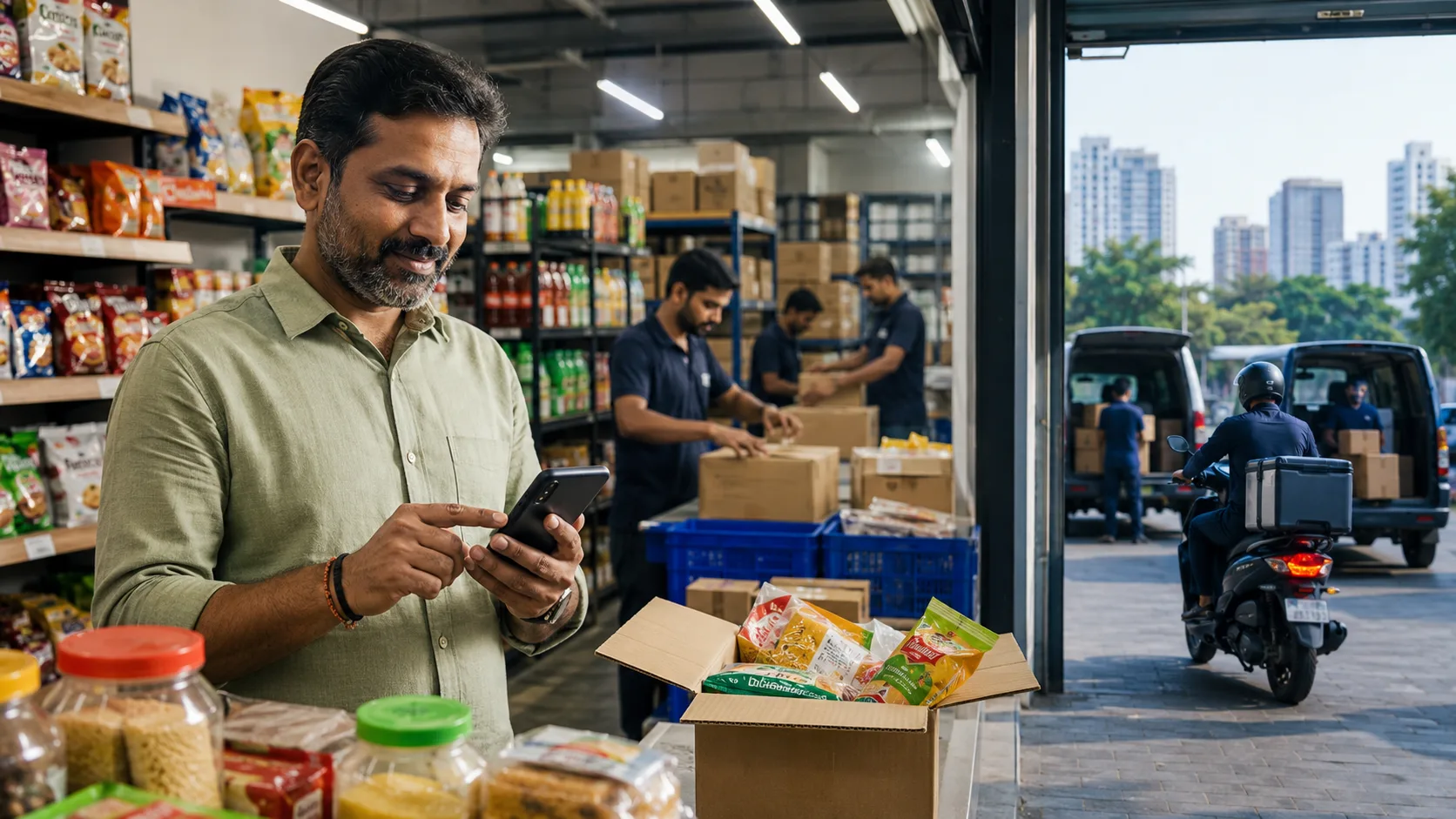
The newest funding moment around Fairdeal.Market says a lot more than one startup raising fresh capital; it shows how B2B quick commerce is becoming one of the most serious infrastructure bets in India’s retail economy. The Gurugram-based platform has secured $15 million in Series A funding, giving it more fuel to scale a model built for neighborhood retailers that need faster, cleaner, and more reliable procurement. For years, the quick-commerce spotlight has mostly stayed on consumers ordering snacks, groceries, and daily essentials in minutes, but Fairdeal is pushing that same urgency into the wholesale side of the market. Its focus on kirana stores, local retailers, dark-store operations, data systems, and last-mile delivery makes the story feel less like a simple funding update and more like a signal that retail supply chains are being rewritten from the bottom up. That is why this moment matters for founders, investors, brands, and anyone watching how technology quietly changes the way small businesses survive in crowded urban markets.
At the center of the story is a startup trying to solve a very old problem with a very modern playbook. Small retailers still form the backbone of India’s everyday commerce, yet many of them continue to deal with fragmented ordering, uncertain stock availability, irregular delivery schedules, and limited visibility into what customers may demand next. Fairdeal.Market is targeting that gap by bringing a faster procurement layer to the kirana ecosystem, where retailers can restock products without waiting through slow traditional distribution cycles. The new capital gives the company room to strengthen its dark-store network, improve its technology infrastructure, deepen retailer engagement, and expand delivery capabilities. In startup language, that means Fairdeal is not only chasing growth; it is trying to become the operating system behind faster small-store retail.
Why B2B Quick Commerce Is Having Its Moment
B2B quick commerce is gaining attention because speed has moved from being a consumer luxury to a business necessity. A small retailer that runs out of high-demand inventory during peak hours does not just lose one sale; it can lose repeat customers, daily revenue, and trust in the neighborhood. Traditional wholesale systems often depend on fixed routes, personal relationships, manual ordering, and delayed fulfillment, which can work in stable markets but becomes painful when demand shifts quickly. Quick commerce changes the expectation by treating business inventory as something that should move almost as fast as consumer orders. That shift creates a new kind of opportunity for startups that can combine local warehousing, demand prediction, route optimization, and retailer-friendly ordering into one tight experience.
Fairdeal’s funding also arrives at a time when investors are becoming more selective about what kind of growth they want to back. The era of pouring money into every delivery startup just for fast expansion has become more cautious, and capital now tends to follow models that show operational discipline, clear demand, and durable market need. In that context, B2B quick commerce has a different pitch from consumer-facing convenience apps because it serves retailers who depend on inventory turnover for survival. A store owner buying stock is not ordering out of impulse; they are making a business decision that directly connects to revenue. That practical demand can make the model attractive if the unit economics, fulfillment density, and retailer retention are strong enough to support scale.
Fairdeal.Market’s Funding Signals a Bigger Retail Shift
The $15 million Series A round gives Fairdeal.Market a stronger position in a category where execution matters more than hype. Funding alone does not build a great supply chain, but it can accelerate the difficult pieces that determine whether a platform becomes useful at scale. For Fairdeal, those pieces include expanding dark-store coverage, improving inventory depth, strengthening technology systems, and building stronger relationships with small retailers who may be cautious about changing old procurement habits. The company’s model depends on trust as much as speed because kirana owners need confidence that products will arrive on time, prices will remain competitive, and stock availability will be dependable. When a startup can reduce daily friction for retailers, it starts moving from being a vendor to becoming part of the retailer’s routine.
The investor mix also adds weight to the story because institutional backing can help a startup move beyond early traction into more structured expansion. Bertelsmann India Investments led the round, with participation from WaterBridge Ventures and Incubate Asia Fund, giving Fairdeal access to capital and strategic support as it scales. In practical terms, the money is expected to support expansion across dense urban markets, where delivery routes can become more efficient and dark stores can serve a higher concentration of retailers. That density is crucial because quick commerce becomes more powerful when the distance between warehouse, inventory, and buyer gets shorter. For Fairdeal, the challenge is not just reaching more stores, but reaching them with enough reliability that retailers feel comfortable depending on the platform every week.
The Kirana Store Problem Fairdeal Wants to Fix
Kirana stores are everywhere, but their back-end supply systems are often much less visible than their storefronts. A customer may only see a compact neighborhood shop filled with daily essentials, but behind that counter sits a constant balancing act of stock planning, cash flow, supplier coordination, and local demand prediction. Many retailers cannot afford overstocking because too much inventory ties up working capital, yet understocking can push customers toward competitors or digital platforms. This is exactly where Fairdeal’s model becomes interesting because fast B2B replenishment could help retailers operate with more confidence and less guesswork. Instead of waiting for traditional distributor cycles, store owners can use a faster layer that fits the pace of modern neighborhood commerce.
The opportunity is especially meaningful in urban and semi-urban markets where demand can change quickly because of weather, festivals, local events, online trends, and shifting household behavior. A retailer may suddenly need more beverages during a heatwave, more packaged snacks during a school holiday, or more household products when a local area sees a spike in demand. If the procurement system is slow, the retailer misses that demand window, and the lost revenue rarely comes back. Fairdeal’s promise is to make replenishment faster and more data-aware, which can help small businesses behave with the agility of larger retail chains. That kind of upgrade matters because the future of retail is not only about who sells online; it is also about who can restock smarter offline.
Dark Stores Are Becoming Startup Infrastructure
Dark stores used to sound like a consumer quick-commerce trick, but they are now becoming a serious infrastructure layer for business commerce. In Fairdeal’s case, dark stores can act as local inventory hubs that hold the products retailers need and make shorter delivery windows possible. This model depends on careful SKU selection, demand forecasting, route planning, and operational discipline because every wasted trip or poorly stocked location can hurt margins. For B2B quick commerce, dark stores are not just warehouses; they are the physical nodes that make digital ordering feel real for small retailers. The better those nodes are placed and managed, the more useful the platform becomes to the businesses around them.
The dark-store strategy also reveals why this is not an easy market to win. A startup must know which products move quickly, which brands retailers trust, which neighborhoods need deeper inventory, and how to keep fulfillment costs under control. It also needs to avoid turning speed into chaos because fast delivery without consistent availability does not solve the retailer’s problem. If Fairdeal can use its new funding to improve the link between demand data and inventory planning, it could create a more resilient procurement experience for stores. That would make its infrastructure valuable not only to retailers, but also to brands trying to understand what is happening closer to the point of sale.
Why Data Could Be Fairdeal’s Real Advantage
The most interesting part of Fairdeal’s model may not be delivery speed alone, but the data layer behind it. When thousands of small retailers order through a digital platform, the startup can begin to see patterns that traditional distribution systems often miss. It can learn which categories are rising, which products are moving in specific neighborhoods, where stockouts are likely, and how retailers respond to price changes or promotional pushes. That intelligence can help Fairdeal manage its own operations more efficiently while also giving brands a sharper view of local retail demand. In a market where offline retail remains massive, real-time retail data can become a powerful asset.
This is where the story connects with broader Startup strategy and modern business innovation. The best commerce companies are no longer just moving goods from one point to another; they are building information systems that make supply chains smarter over time. Fairdeal’s ability to strengthen its technology and data infrastructure could help it improve assortment planning, retailer segmentation, delivery routing, and brand partnerships. That matters because the long-term value of a B2B platform often depends on whether it can become smarter as more customers use it. If each transaction improves the system, the platform gains a compounding advantage that is harder for slower competitors to copy.
The Investor Logic Behind B2B Retail Tech
Investors are not only chasing speed in this category; they are chasing infrastructure that can become deeply embedded in everyday business behavior. Consumer quick commerce can be exciting, but it often faces intense marketing costs, discount pressure, and loyalty challenges because customers can switch apps quickly. B2B retail tech has its own difficulties, but it can build stickier relationships if retailers depend on the platform for recurring procurement. A store that uses the same system to restock daily essentials may become far more predictable than a consumer deciding which app has the best coupon today. That recurring behavior is one reason B2B models can attract serious attention when they show signs of strong retention and repeat usage.
Fairdeal’s funding reflects the idea that small retail is still a huge market with room for digital transformation. The kirana ecosystem has already survived waves of modern retail, e-commerce, and delivery apps because it is deeply local, relationship-driven, and convenient in ways large platforms cannot fully replace. Instead of trying to remove neighborhood stores from the equation, Fairdeal is trying to give them better procurement tools. That approach can feel more sustainable because it upgrades existing retail behavior rather than forcing every merchant into a completely new identity. For investors, that creates a growth thesis built around enabling the old economy with new infrastructure.
What Makes the B2B Quick Commerce Race Difficult
The opportunity is large, but B2B quick commerce is operationally demanding. A startup must handle inventory forecasting, supplier coordination, retailer onboarding, price competitiveness, last-mile delivery, returns, and payment behavior while keeping margins healthy. Unlike pure software companies, platforms like Fairdeal cannot scale only by pushing code because they also need physical infrastructure and ground execution. Every new zone adds complexity, and every delivery promise creates pressure on the system. That is why the companies that survive in this space will likely be the ones that balance ambition with operational discipline.
Another challenge is retailer habit change, which can be slower than startup decks usually suggest. Many kirana owners have long-standing relationships with distributors, wholesalers, sales agents, and local suppliers, even when those systems are imperfect. A new platform has to prove that it is not just faster on paper, but consistently useful during real business hours. It also has to offer a buying experience that feels simple enough for merchants who do not want complicated dashboards or unpredictable pricing. If Fairdeal can make the experience feel natural, dependable, and financially sensible, adoption can become much easier to sustain.
How Brands Could Benefit From Fairdeal’s Model
Brands have a lot to gain from a stronger B2B quick-commerce layer because traditional retail visibility can be surprisingly limited. A brand may know what it shipped into the distribution network, but it may not always know how quickly products are moving across small stores, which neighborhoods are responding, or where shelves are going empty. A platform like Fairdeal can potentially shorten that feedback loop by connecting brand supply with retailer demand more directly. That can help brands plan promotions, test regional products, and understand demand at a more local level. In fast-moving consumer categories, better data can make the difference between reacting late and catching demand early.
This creates a second layer of value beyond retailer procurement. Fairdeal can serve kirana stores by giving them faster access to products, while also serving brands by helping them reach fragmented retail networks with more precision. That dual-sided value is important because many successful B2B platforms become stronger when they solve problems for multiple participants in the same ecosystem. Retailers want availability, brands want distribution intelligence, and the platform wants transaction density. When those incentives align, the model becomes more than delivery; it becomes a marketplace with operational depth.
Impact on India’s Retail Tech Landscape
Fairdeal’s new funding adds momentum to India’s wider retail-tech transformation. The country has already seen massive changes in consumer payments, e-commerce, food delivery, logistics, and quick commerce, but the small-retailer supply chain still has plenty of room for modernization. The next wave may be less glamorous than consumer apps, yet more foundational because it works behind the scenes. If neighborhood stores can access better procurement, faster replenishment, and smarter inventory tools, they can compete more effectively in a market shaped by both digital platforms and physical convenience. That makes the Fairdeal story relevant beyond one funding round.
The shift could also reshape how people think about innovation in emerging markets. Instead of copying Western retail models, Indian startups are often building around local realities such as kirana density, cash-flow sensitivity, multilingual merchants, and highly specific neighborhood demand. Fairdeal’s model fits that pattern because it does not assume small stores will disappear under modern retail pressure. It assumes they will remain important, but need better infrastructure to keep up. That is a more grounded version of technology disruption, and it may be more powerful because it works with the market instead of pretending the market is something else.
Practical Insights for Founders Watching Fairdeal
Founders can learn several practical lessons from Fairdeal’s funding moment, especially if they are building in commerce, logistics, or retail infrastructure. The first lesson is that boring problems can become huge opportunities when they affect millions of daily transactions. Restocking a small shop may not sound as flashy as generative AI or consumer social apps, but it touches real revenue, real livelihoods, and real supply-chain inefficiencies. The second lesson is that speed only matters when it solves a painful business problem, not when it is added as a marketing feature. Fairdeal’s model gets attention because faster delivery can directly help retailers avoid stockouts and improve sales continuity.
The third lesson is that infrastructure startups need strong sequencing. Expanding too fast can damage service quality, but moving too slowly can leave openings for competitors. Founders in similar markets should think carefully about city selection, density, product assortment, delivery economics, and customer retention before chasing vanity growth. They should also treat data as a core product, not a side benefit, because operational intelligence can become a major advantage over time. Fairdeal’s next phase will likely depend on whether it can turn funding into tighter execution rather than just a larger footprint.
What Retailers May Expect Next
For retailers, the rise of platforms like Fairdeal could mean more choice and more pressure at the same time. A better procurement system can reduce stress, improve stock availability, and help stores respond faster to demand. However, it may also raise the competitive bar because once some retailers restock faster, others may feel pushed to modernize as well. The stores that adapt early could gain an advantage by maintaining better availability and using data-backed buying decisions. In neighborhood retail, small improvements can matter a lot because customer loyalty often depends on whether the store has the product at the exact moment someone needs it.
Retailers may also become more comfortable with digital procurement if platforms keep the experience simple. The best product for kirana owners may not be the most complex app, but the one that makes ordering feel easier than calling multiple suppliers or waiting for a distributor visit. Pricing transparency, reliable delivery timing, product availability, and responsive support will matter more than flashy features. If Fairdeal can make digital procurement feel dependable in the everyday rhythm of a store, it can build trust slowly but deeply. That kind of trust is hard to buy with ads, which is why execution will matter more than noise.
The Bigger Trend: Commerce Is Moving Downstream
One of the biggest takeaways from Fairdeal’s funding is that commerce innovation is moving deeper into the supply chain. The first wave of digital commerce focused on what shoppers could see, such as apps, payments, storefronts, and delivery promises. The next wave is more interested in what merchants need before the customer even walks in, including stock planning, procurement speed, warehousing, and real-time demand signals. This downstream shift is less visible to the public, but it can change retail economics in a meaningful way. When the back end improves, the front-end customer experience often improves without customers knowing why.
That is why B2B quick commerce deserves attention from anyone tracking technology and business innovation. It sits at the intersection of logistics, retail, data infrastructure, local commerce, and startup execution. It also reflects a broader truth about modern markets: speed is valuable, but only when it is paired with reliability and relevance. Fairdeal’s funding suggests that investors still believe there is a major opportunity in helping small retailers operate with the speed of much larger businesses. The companies that make that possible could become some of the most important retail infrastructure players of the next decade.
Conclusion: Fairdeal’s Raise Is Bigger Than Funding
Fairdeal.Market’s $15 million Series A is not just another startup funding headline; it is a snapshot of where retail technology is going next. The company is using B2B quick commerce to target a real operational pain point for kirana stores, and that makes the model more grounded than many convenience-driven startup ideas. By combining dark stores, faster replenishment, retailer engagement, delivery operations, and data infrastructure, Fairdeal is trying to build a stronger bridge between traditional retail and modern commerce systems. The road ahead will not be easy because logistics-heavy startups must prove their economics every day, but the size of the problem gives the opportunity serious weight. If Fairdeal can turn capital into consistent execution, B2B quick commerce may become one of the most important forces shaping the future of small retail.