
Lab-Grown Wood Pushes ClimateTech Forward
 Vortixel
13 minutes read
Vortixel
13 minutes read
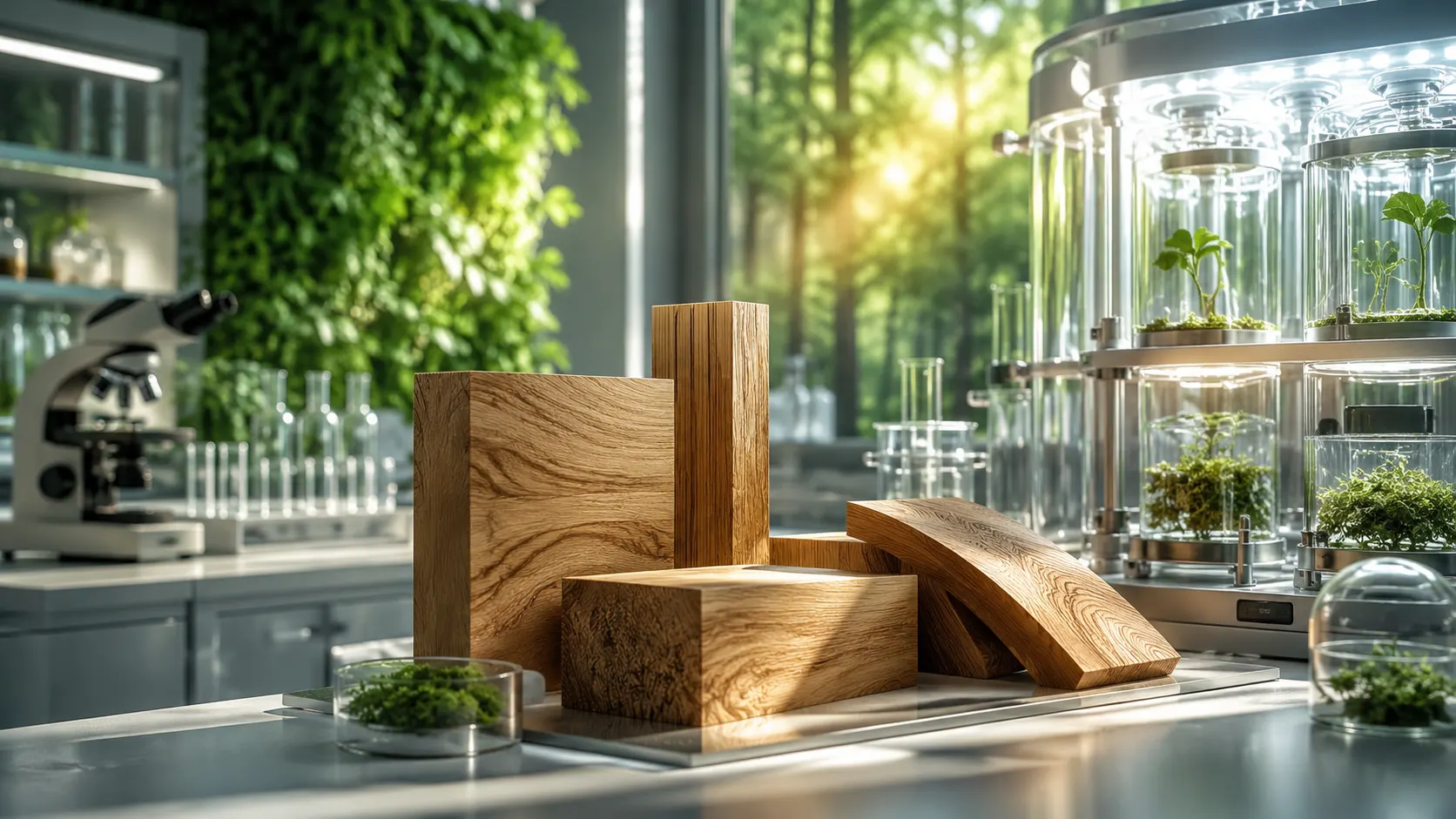
The climate story usually starts with solar panels, batteries, carbon capture, or electric cars, but lab-grown wood is now stepping into the frame with the kind of quiet confidence that makes startup watchers lean closer. New Dawn Bio, a Dutch ClimateTech startup, is trying to grow wood from tree stem cells inside bioreactors, turning one of the oldest materials in human history into a next-generation manufacturing idea. The concept sounds futuristic at first, almost like something from a design lab that got lost inside a forest, but the logic is pretty grounded. If the world still needs wood for buildings, furniture, packaging, interiors, and consumer products, then the big question becomes whether wood can be produced with less pressure on forests and fewer supply-chain shocks. That is where lab-grown wood becomes more than a strange headline; it becomes a serious signal that climate innovation is moving from energy infrastructure into the materials we touch every day.
New Dawn Bio’s recent funding moment matters because it shows how investors are beginning to look beyond the obvious climate categories and into the deeper layers of industrial demand. For years, ClimateTech conversations were dominated by clean power, EV charging, hydrogen, and carbon accounting software, while materials innovation often felt like the nerdy back room of the movement. Now that back room is getting louder, because construction, furniture, retail, and packaging all carry hidden environmental costs that do not disappear just because a company installs rooftop solar. Wood is renewable in theory, but global demand, land-use pressure, deforestation risk, long growth cycles, and inconsistent supply all make the market more complicated than the word “natural” suggests. A startup that can grow wood-like material from cells is not just pitching a greener product; it is pitching a different relationship between biology, manufacturing, and the future of physical goods.
Why Lab-Grown Wood Is Suddenly Interesting
The reason lab-grown wood is attracting attention is not because people suddenly stopped loving forests, handcrafted tables, or timber architecture. It is because the world has reached a point where demand for sustainable materials is rising faster than the systems built to supply them responsibly. Traditional forestry can be well managed, and certified timber will remain important, but even responsible supply chains face limits from land availability, climate stress, pests, wildfire, logistics, and decades-long tree growth cycles. Lab cultivation changes the timeline by taking plant cells and trying to guide them into useful material under controlled conditions, instead of waiting years for a tree to mature. That shift is what makes the story feel bigger than one startup, because it hints at a future where biology becomes a programmable production platform rather than only a source of raw extraction.
The startup angle is also fascinating because New Dawn Bio is not entering an easy market with obvious consumer hype. Unlike an AI app that can go viral overnight, a materials startup has to prove science, scale, cost, quality, regulation, customer trust, and manufacturing discipline before it can become a real business. That makes the journey harder, but it also makes the upside more defensible if the company solves the core problem. Physical materials are sticky markets, and once manufacturers trust a new input, it can become deeply embedded in supply chains. In that sense, ClimateTech startups like New Dawn Bio are not chasing attention for the sake of attention; they are trying to earn a place inside industries where change usually moves slowly until it suddenly becomes unavoidable.
From Forest Floor to Bioreactor
The basic story behind New Dawn Bio begins with an elegant question: what if wood did not have to come only from cutting down trees? The company’s approach centers on using tree stem cells and growing them in bioreactors, a setup more commonly associated with biotech, fermentation, cultivated meat, and advanced biomaterials. Instead of treating a tree as the only possible factory for wood, the startup is trying to move part of that biological production process into a controlled environment. That does not mean forests become irrelevant, and it does not mean the world should stop planting or protecting trees. It means founders are exploring whether some future wood demand could be met through cell-grown systems that reduce waste, shorten production cycles, and create more predictable material outputs.
This is where the story gets especially interesting for the Startup ecosystem, because New Dawn Bio sits at the intersection of science, sustainability, manufacturing, and venture capital. Most startups build software because software is fast to test, easy to distribute, and relatively cheap to iterate. DeepTech and ClimateTech companies operate differently, because they often need labs, equipment, scientific talent, physical testing, industrial partnerships, and patient capital before revenue becomes meaningful. That makes every funding round more than a financial headline; it becomes a progress marker in a long technical race. When a startup working on cell-grown wood gets fresh capital, the market is not just funding a product idea, but a belief that the future of materials may be grown, engineered, and optimized rather than simply harvested.
The ClimateTech Shift Behind the Hype
ClimateTech has entered a more mature phase, and that maturity is changing what investors want to see. A few years ago, the category could ride broad optimism around decarbonization, but the current market is more selective, more technical, and more focused on measurable impact. Investors are asking whether a startup can lower emissions, survive difficult industrial sales cycles, and eventually compete on cost without depending forever on green branding. That shift favors companies with a clear connection to large markets and real-world supply problems. Lab-grown wood fits that moment because it touches construction, design, packaging, retail fixtures, and consumer goods, all while speaking to a cultural demand for materials that feel both premium and sustainable.
The bigger trend is that climate innovation is no longer only about replacing fossil fuels; it is also about redesigning the material economy. Buildings need lower-carbon concrete, brands need alternatives to plastic, fashion needs better fibers, electronics need cleaner components, and furniture makers need materials that can satisfy customers without adding more strain to ecosystems. This creates room for startups that use biology as a production method, whether they are growing leather-like materials, fermentation-based proteins, bio-based chemicals, or now wood from tree cells. The logic is similar across these sectors: nature already has powerful design systems, and technology can sometimes help reproduce or guide those systems with greater efficiency. New Dawn Bio’s story lands right inside that wave, where biology is not just studied in labs but used as a tool for industry.
Why Investors Care About Material Startups
Material startups are not always flashy, but they can become incredibly important when they solve a pain point that major industries cannot ignore. A company that creates a better input for manufacturing can quietly sit underneath thousands of products, which is why investors still pay attention even when the early science feels slow or complicated. In the case of lab-grown wood, the investor thesis likely connects climate pressure, supply-chain volatility, regulatory scrutiny, and the premium value of sustainable design. Companies across the world are under pressure to prove that their sourcing is responsible, and consumers are becoming more aware of the story behind the products they buy. If a new material can offer reliable quality, lower environmental pressure, and a strong brand narrative, it can become attractive to manufacturers looking for both risk reduction and market differentiation.
Still, the road from promising lab result to mainstream material is not simple, and that is where startup reality cuts through the buzz. New Dawn Bio will need to show that its process can scale without becoming too expensive, energy-intensive, or operationally fragile. It will also need to prove that its wood-like material can meet the expectations of real customers, including durability, texture, appearance, processing behavior, and compatibility with existing manufacturing tools. A beautiful sample may win attention, but repeatable production wins markets. That is why the most important part of this story is not just that lab-grown wood exists, but whether the company can move from scientific breakthrough to industrial reliability.
The Business Case Beyond Saving Trees
The easiest way to describe lab-grown wood is to say it could reduce pressure on forests, but the business case is broader than that. Manufacturers do not only care about sustainability; they care about cost predictability, supply consistency, performance, design flexibility, and whether a material can fit into existing production timelines. Traditional wood comes with variation, which can be beautiful for artisans but challenging for standardized industrial processes. A cell-grown material could eventually be tuned for certain properties, creating possibilities that natural timber cannot always offer at scale. If that promise holds, New Dawn Bio could position itself not just as a climate startup but as a platform for better, more controllable bio-based materials.
There is also a brand story hiding in plain sight, and it matters more than some engineers like to admit. Consumers increasingly want products that feel warm, natural, and emotionally durable, but they also want to avoid the guilt attached to wasteful consumption. Wood has always carried a premium signal because it feels authentic, tactile, and timeless. A lab-grown version would need to earn that same emotional trust, which is a much harder challenge than simply saying the science works. The winning strategy may involve starting with specific high-value applications where sustainability, design, and scarcity all matter, rather than trying to replace commodity timber from day one.
Where This Could Hit First
The first wave of lab-grown wood products may not look like entire houses built from bioreactor-grown beams. More realistically, early applications could appear in premium interiors, luxury packaging, design objects, furniture details, decorative panels, or specialty components where material cost is less brutal and storytelling adds value. That path is common for advanced materials because early production is usually expensive, and startups need customers who care enough to pay for innovation before scale brings costs down. Over time, if production improves and unit economics become stronger, the material could move into wider commercial uses. This kind of market entry may feel slow, but it is often how deep innovation becomes normal without forcing customers to take a giant leap all at once.
For founders watching this space, the lesson is that ClimateTech is becoming less about slogans and more about wedge markets. A wedge market is the first narrow use case where a startup can win because the customer pain is sharp, the product advantage is clear, and the business can learn fast. New Dawn Bio’s potential wedge may come from customers who already care about sustainable design and need materials that can carry a premium narrative. Those customers could help the startup refine product quality, collect feedback, build credibility, and move toward broader use cases. In the modern startup world, that is often how a radical idea avoids becoming a science project that never meets the market.
The Practical Challenges Nobody Should Ignore
Every exciting ClimateTech story needs a reality check, because the gap between breakthrough and adoption can be brutal. For lab-grown wood, the first challenge is scale, since bioreactor-based production has to deliver enough material at a cost customers can justify. The second challenge is energy use, because a material cannot claim climate advantage if the production process consumes too much power from dirty grids. The third challenge is performance validation, because wood is used in many ways and each application has its own standards, safety expectations, and durability requirements. The fourth challenge is trust, because architects, manufacturers, designers, and consumers need to understand what the material is, how it behaves, and why it deserves a place next to traditional wood.
There is also the cultural question of whether people will accept wood grown in a lab as “real” enough. Food startups have already learned that scientific novelty can attract curiosity and skepticism at the same time. Materials may face less emotional resistance than food, but words still matter, especially when a product touches ideas of nature, craft, and authenticity. Calling something cell-grown wood, biofabricated wood, engineered timber, or cultivated wood can shape how the market responds before a customer even holds the material. That means communication will be part of the product strategy, not just a marketing layer added at the end.
Why This Matters for Startup Founders
New Dawn Bio’s rise into the ClimateTech conversation offers a useful signal for founders building outside the obvious software lane. The startup market still loves AI, automation, and cloud platforms, but there is growing respect for companies that bring science into giant physical markets. These businesses are harder to build, but they can create deeper moats when they work because their advantage lives in process knowledge, patents, manufacturing relationships, and technical execution. The message is not that every founder should suddenly start growing materials in a lab. The message is that the next wave of valuable startups may come from people willing to solve unglamorous supply problems with unusually creative technology.
For business builders, the practical insight is to look for markets where sustainability pressure and operational pain overlap. A product that is only greener may struggle if it is too expensive or too hard to use, while a product that only saves money may miss the strategic value of climate alignment. The strongest ClimateTech startups often sit between those two forces, offering customers a way to reduce risk, improve resilience, and tell a better story to their own buyers. Lab-grown wood has a chance because it speaks to both sides at once. It could help companies rethink sourcing while also opening new design and manufacturing possibilities that traditional materials cannot easily match.
A New Materials Race Is Taking Shape
The rise of lab-grown wood should also be seen as part of a wider race to own the future of sustainable materials. Startups, universities, corporations, and investors are all searching for alternatives that can reduce environmental pressure without asking consumers to give up quality or beauty. That is a crucial point, because climate-friendly products often fail when they feel like a downgrade. The most successful new materials will not win by sounding responsible alone; they will win by being desirable, useful, reliable, and scalable. If New Dawn Bio can make its material feel premium while also proving environmental and industrial value, it could become part of a much larger redesign of how everyday goods are made.
This race will not be decided by one startup or one funding round, but early movers can shape the language and expectations of an entire category. When people first hear about wood grown from tree stem cells, the idea can feel strange, but strangeness is often the first stage of normalization in tech. Solar panels, electric cars, plant-based meats, and cloud computing all had their own moments when they sounded niche, expensive, or unrealistic to mainstream buyers. Over time, the winners became less defined by novelty and more defined by performance. That is the phase lab-grown materials are trying to reach now, and New Dawn Bio’s progress gives the market one more reason to pay attention.
Conclusion: ClimateTech Gets More Tangible
The New Dawn Bio story lands because it makes ClimateTech feel tangible, textured, and close to daily life. Instead of asking people to imagine abstract carbon markets or distant grid upgrades, lab-grown wood asks them to imagine a table, a wall panel, a package, or a design object made through a cleaner biological process. That shift matters because the climate transition will not be won only through massive infrastructure projects; it will also be shaped by the materials that fill homes, offices, stores, and cities. New Dawn Bio still has to prove scale, cost, quality, and adoption, but its ambition points toward a future where biology and manufacturing become deeply connected. If the company can turn its scientific promise into real industrial supply, lab-grown wood may become one of the clearest signs that the next ClimateTech boom is not just digital, but physical, beautiful, and built into the world around us.