
VoltaGrid Funding Signals AI Power Boom
 Vortixel
19 minutes read
Vortixel
19 minutes read
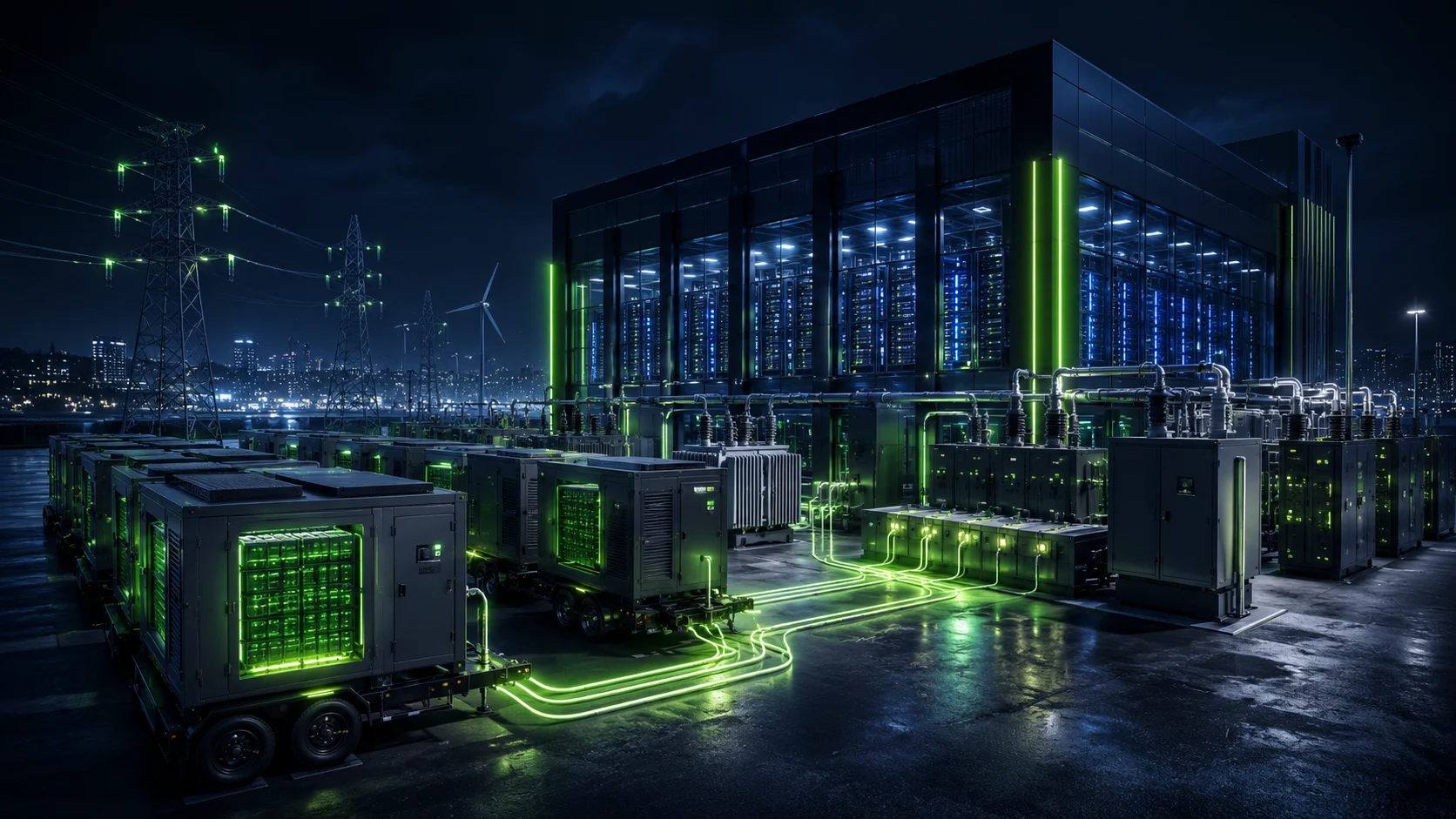
VoltaGrid funding has become one of the clearest signals that the next startup gold rush is not only happening in software, but also in the physical infrastructure powering the AI era. The new US$1 billion backing puts the energy startup in a much bigger conversation about data centers, mobile power, grid pressure, and the race to support compute-hungry industries. For years, startup headlines were mostly dominated by apps, cloud platforms, fintech models, and AI tools that lived behind sleek dashboards. Now, the market is paying close attention to companies that can deliver electricity, fuel systems, and flexible power solutions when traditional infrastructure moves too slowly. That shift makes VoltaGrid more than just another funded startup; it turns the company into a case study for how energy, AI, and industrial demand are starting to collide.
The timing also feels important because businesses are entering a phase where digital growth cannot be separated from energy capacity. AI models need servers, servers need data centers, data centers need power, and that power needs to arrive faster than many public grids can currently handle. This is where VoltaGrid funding becomes relevant for founders, investors, operators, and anyone watching the startup economy from the inside. It shows that capital is moving toward startups that solve foundational bottlenecks rather than only creating another layer of software. In a market where everyone is talking about AI adoption, VoltaGrid represents the less glamorous but absolutely essential side of the story: keeping the machines running.
For readers following the startup ecosystem on VoltaGrid funding, the bigger lesson is that infrastructure is becoming cool again. Not cool in the social media sense, but cool in the way investors define long-term demand, defensibility, and market timing. A startup that can provide reliable energy for remote operations, high-demand industrial sites, or expanding data center footprints has a different kind of leverage from a normal software company. It sits closer to the physical economy, where contracts can be larger, switching costs can be higher, and customer pain points are difficult to ignore. That is why this funding round deserves a closer look beyond the headline number.
Why VoltaGrid Funding Matters Right Now
The biggest reason VoltaGrid funding matters is that it reflects a broader investor shift toward companies solving energy constraints for modern computing and industrial growth. A billion-dollar commitment is not a casual bet, especially in a startup environment where investors have become more selective after years of inflated valuations. This kind of capital usually points to a strong belief that the company operates in a market with urgent demand, large customers, and expansion potential. VoltaGrid is positioned around power solutions, and that gives it a direct connection to the infrastructure pressures created by AI, manufacturing, electrification, and energy transition projects. In simple terms, the startup is not selling a luxury; it is operating in a space where customers increasingly need answers fast.
The AI boom has made power availability one of the biggest hidden challenges in the tech economy. Public conversations often focus on chips, model performance, cloud pricing, and software adoption, but the energy layer is becoming just as strategic. Data centers need enormous amounts of electricity, and new projects often face long wait times for grid connections or utility upgrades. That delay creates room for companies that can provide flexible, modular, or rapid-deployment power systems. When viewed through that lens, VoltaGrid funding is not just a finance story; it is a signal that the market sees energy infrastructure as a core part of the AI supply chain.
There is also a practical business angle that makes this story stand out. Startups serving infrastructure demand often face heavier capital needs than pure software businesses, because they deal with equipment, logistics, safety, operations, and large-scale deployment. That can make growth more expensive, but it can also create stronger barriers to entry if the company executes well. Investors backing a company at this level are likely thinking about the long runway created by energy demand across multiple sectors. For VoltaGrid, the challenge will be turning big capital into reliable execution while maintaining operational discipline in a market that does not forgive weak delivery.
The Startup Story Behind a Physical Power Play
VoltaGrid’s rise fits into a newer startup narrative where the most important companies may not look like traditional Silicon Valley darlings. They may not be built entirely around viral apps, consumer platforms, or lightweight SaaS tools. Instead, they operate at the edge of power generation, logistics, energy management, and industrial services. That makes the story more grounded, because the company’s value is tied to real-world deployment rather than only digital adoption curves. For a startup audience, this is a reminder that the next wave of high-growth companies may be built in sectors that once felt too heavy, too complex, or too capital intensive for the classic startup playbook.
What makes this moment especially interesting is the way infrastructure startups are borrowing some of the speed and ambition of tech companies. Customers do not want to wait years for energy solutions when their operations are scaling now. AI companies, data center developers, industrial firms, and energy-intensive businesses need partners that can move quickly while still meeting safety and reliability standards. That creates a narrow but valuable lane for companies that understand both the urgency of tech growth and the discipline of industrial execution. VoltaGrid appears to be operating in that lane, and the size of the funding suggests that investors see room for significant expansion.
This also changes how founders should think about opportunity. For a long time, many startup builders were trained to chase low-asset, high-margin software models because they were easier to scale and easier to pitch. But the market has changed, and the problems getting funded are changing with it. Energy constraints, climate resilience, compute infrastructure, supply chain automation, and industrial modernization are now major startup themes. The companies that win in these areas may look less like trendy apps and more like operational powerhouses with deep technical teams, strong customer relationships, and serious execution capacity.
AI Demand Is Rewriting the Energy Map
The connection between AI and energy is no longer a niche concern for engineers and grid planners. It is becoming a mainstream business issue because AI infrastructure depends on a massive and reliable power supply. Training and running advanced models requires high-performance computing systems, and those systems create heavy electricity demand across data center networks. When companies race to build or expand data centers, they are not only competing for land, chips, and talent. They are also competing for power access, grid capacity, backup systems, and energy partners capable of supporting fast deployment.
This is where VoltaGrid funding becomes part of a much bigger market pattern. The AI economy is creating demand beyond software subscriptions and cloud dashboards. It is pulling capital into semiconductors, cooling systems, data center construction, power generation, battery storage, grid modernization, and fuel logistics. Every layer of that stack can become a startup opportunity if a company solves a painful enough bottleneck. VoltaGrid’s momentum shows that the energy layer is moving from the background to the center of the tech growth conversation.
For data center developers, power delays can be expensive because time lost waiting for infrastructure can become revenue lost from unused capacity. For AI companies, compute availability can shape product timelines, customer contracts, and competitive positioning. For enterprises adopting AI, energy costs may eventually influence where workloads are hosted and which providers can scale affordably. That is why energy startups are no longer just adjacent to tech; they are becoming part of tech’s operating foundation. The companies that can bridge this gap may become essential partners in the next stage of digital expansion.
Why Investors Are Looking Beyond Pure Software
Investor interest in infrastructure startups has grown because the market is searching for durable demand after several cycles of hype-driven software funding. Many software categories became crowded, customer acquisition costs rose, and buyers became more cautious about adding new tools to already bloated tech stacks. At the same time, energy and infrastructure challenges became harder to ignore. When a company solves a mission-critical problem tied to physical operations, the customer need can be more direct than a nice-to-have productivity app. That makes infrastructure startups attractive even when they require more capital and longer development timelines.
The startup funding environment has also become more disciplined, which makes large rounds more meaningful. In a loose capital market, huge funding announcements can sometimes reflect hype more than fundamentals. In a tighter environment, investors tend to ask harder questions about revenue quality, customer demand, market size, and execution risk. A major investment in a company like VoltaGrid suggests confidence in the category, not just excitement around a catchy narrative. It also reflects a belief that energy demand tied to AI, industrial operations, and electrification will not disappear after one news cycle.
There is another reason infrastructure is gaining attention: defensibility. Software can be copied quickly when the idea is simple and the switching costs are low. Infrastructure businesses are harder to replicate because they require physical assets, operational knowledge, regulatory awareness, supplier networks, and customer trust. That complexity can slow down growth, but it can also protect a company once it builds a strong market position. For investors seeking long-term value, that tradeoff can look increasingly attractive in a world where AI has made basic software features easier to imitate.
What This Means for the Energy Startup Market
The energy startup market is expanding beyond clean energy branding and into a more practical conversation about reliability, flexibility, and speed. Customers want solutions that work under real pressure, not just polished sustainability decks. Some businesses need temporary power for remote operations, while others need scalable systems that support rapid industrial growth. Data centers need stable electricity, backup planning, and partners that understand the cost of downtime. This creates a wide opportunity set for startups that can combine energy expertise with modern operational technology.
VoltaGrid’s funding could also encourage more founders to enter energy-adjacent categories. That does not mean every new startup should suddenly become a power company. It means there may be room for software, analytics, financing, equipment, logistics, grid optimization, and monitoring tools that support the same infrastructure boom. A large funding round can act like a market signal, telling founders and investors where pain points are becoming too expensive to ignore. For more startup trend analysis, readers can also explore the broader startup ecosystem where infrastructure, AI, and venture capital increasingly overlap.
The ripple effect may be especially strong in the data center supply chain. As AI workloads grow, every supporting sector becomes more important, from cooling and power conversion to backup generation and site planning. Companies that once looked like industrial service providers may suddenly become strategic players in the digital economy. That shift could create unusual partnerships between energy firms, private equity, cloud providers, chip companies, construction groups, and local utilities. The startup winners will likely be the teams that understand these intersections before they become obvious to everyone else.
The Data Center Pressure Behind the Headline
Data centers are at the heart of this story because they represent one of the fastest-growing sources of energy demand in the modern economy. Every AI product that feels instant to a user depends on physical infrastructure somewhere else. Behind a chatbot, automation tool, search feature, or image generator, there are servers running in buildings that require continuous power and cooling. As companies push more AI workloads into production, the infrastructure burden becomes larger and more visible. That makes power availability a boardroom topic, not just a technical detail hidden inside operations teams.
The challenge is that traditional grid expansion does not always move at startup speed. Utility planning, permitting, transmission upgrades, and local approval processes can take time. Meanwhile, AI companies and enterprise customers are racing to meet demand today. This mismatch creates an opening for companies that can provide energy solutions with faster deployment models. If VoltaGrid can deliver in that environment, the company may benefit from a market where urgency is high and delays carry real financial consequences.
Still, the opportunity is not simple. Energy infrastructure requires trust because failure can be expensive and disruptive. Customers need consistent performance, transparent costs, safety compliance, and reliable service across different conditions. A startup in this space cannot rely only on brand buzz or investor excitement. It has to prove itself through operational outcomes, and that is where the next chapter of the VoltaGrid story will likely be judged.
Trend Analysis: Infrastructure Is Becoming the New AI Layer
The most important trend behind VoltaGrid funding is that infrastructure is becoming a visible layer of the AI economy. The first phase of AI hype focused on models, apps, and productivity tools. The next phase is focusing on everything needed to make those tools scalable, affordable, and reliable. That includes chips, data centers, cooling, networking, energy, and operations. When investors put major capital into an energy startup, they are effectively betting that the AI boom will keep creating demand for the physical systems underneath it.
This trend also suggests that the boundaries between industries are blurring. A company serving energy demand may now be part of the AI story. A data center developer may now be part of the real estate, utility, and cloud computing story at once. A startup that understands power deployment may become relevant to tech giants, industrial firms, and local economies. In this environment, the most valuable companies may be those that can translate between sectors that used to operate separately.
There is also a generational shift in how startup opportunity is being defined. Younger builders and operators are entering a market where software alone may not feel as exciting as it did a decade ago. The biggest problems now involve climate pressure, energy resilience, manufacturing capacity, logistics, security, and AI infrastructure. These are not easy spaces, but they are deeply important. VoltaGrid’s momentum fits that larger mood, where ambitious startups are moving into harder categories because the rewards are tied to real-world transformation.
Impact on Founders Watching the Market
For founders, the VoltaGrid story sends a clear message: solving hard infrastructure problems can attract serious capital when the market need is strong enough. This does not mean every founder should chase billion-dollar industrial ideas without understanding the risks. It means that venture-scale opportunities are not limited to consumer apps or AI wrappers. In fact, the flood of AI tools may push more value toward companies that control scarce resources, critical workflows, or physical deployment capacity. Founders who can connect software intelligence with real-world infrastructure may have a stronger chance of building something durable.
The practical lesson is to look for bottlenecks created by fast-growing markets. AI created a compute bottleneck, compute created a data center bottleneck, data centers created a power bottleneck, and power demand created room for energy startups. This chain reaction is how major startup opportunities often emerge. The best founders do not only chase the surface trend; they ask what the trend breaks, strains, or exposes underneath. VoltaGrid’s funding is a reminder that the most valuable startup idea may sit one layer below the headline everyone else is chasing.
There is also a lesson about customer urgency. Infrastructure startups can be difficult, but they become powerful when they solve a problem customers cannot postpone. If a data center needs power, the need is immediate and measurable. If an industrial operation faces energy constraints, the cost of inaction can be visible on the balance sheet. That kind of urgency creates a different sales dynamic from products that require buyers to imagine future productivity gains. It gives startups a sharper value proposition, as long as they can actually deliver.
Impact on Investors and the Venture Landscape
For investors, VoltaGrid funding highlights the return of big, asset-heavy opportunities in the startup conversation. Venture capital has historically loved software because it can scale quickly with high margins. But as software becomes more competitive and AI lowers the cost of building basic features, investors are looking for companies with stronger moats. Energy infrastructure can provide those moats through physical assets, operational complexity, customer contracts, and expertise that cannot be downloaded overnight. That makes the category more challenging, but also potentially more defensible.
The deal also reflects a broader willingness to fund companies that sit between traditional venture capital and private equity-style infrastructure investing. These businesses may not fit perfectly into old categories because they need growth capital, operational assets, and long-term customer relationships at the same time. That hybrid profile can be attractive when the market opportunity is large and demand is already visible. Investors may increasingly look for startups that combine tech-enabled operations with infrastructure-level importance. VoltaGrid sits directly inside that shift, which is why the round feels bigger than a normal funding announcement.
However, investors also need to stay realistic. Capital-heavy growth can create pressure if expansion moves faster than operational quality. Equipment costs, supply chain issues, regulatory requirements, and customer concentration can all create risk. A huge round gives a company more firepower, but it also raises expectations for execution. In this type of market, the winners will not simply be the startups that raise the most money; they will be the ones that convert funding into reliable capacity, strong margins, and customer trust.
Practical Insights for Startup Operators
Startup operators can learn several practical lessons from this moment, even if they are not building in energy. The first lesson is that category timing matters. VoltaGrid is gaining attention at a time when energy demand, AI infrastructure, and industrial growth are all moving into the same conversation. When a startup aligns with multiple macro trends at once, its story becomes easier for customers and investors to understand. That does not guarantee success, but it can create momentum that is difficult to manufacture artificially.
The second lesson is that operational credibility can be a major growth advantage. In a market filled with pitch decks promising transformation, customers still care about execution. They want to know whether a company can deliver consistently, respond quickly, manage complexity, and solve problems without creating new ones. This is especially true in infrastructure, but it applies to software startups too. A strong narrative may get attention, but reliable delivery keeps customers.
The third lesson is to think beyond the obvious customer. A company solving energy challenges may serve data centers, industrial firms, remote operations, utilities, or large enterprises with specialized needs. A software startup solving workflow problems may also find customers in overlooked industries rather than only chasing tech companies. The best startup strategies often come from mapping where pain is urgent and budgets already exist. VoltaGrid’s growth story suggests that old-school sectors can become breakout markets when new demand changes the economics.
Key Signals to Watch After the Funding
After a major round like this, the next important question is not just how much money was raised, but how effectively it gets used. Expansion into new markets, larger customer contracts, equipment deployment, hiring, and partnerships will all matter. The company will need to show that it can scale without losing the operational reliability that infrastructure customers expect. In energy, reputation compounds slowly and can be damaged quickly. That means execution discipline will be just as important as growth ambition.
- Customer expansion: Watch whether demand grows across data centers, industrial sites, and other high-energy sectors.
- Deployment speed: Fast power solutions are valuable only if the company can deliver safely and consistently.
- Margin quality: Capital-heavy businesses need strong unit economics to turn scale into long-term strength.
- Strategic partnerships: Energy, data center, and industrial alliances could shape how quickly VoltaGrid expands.
- Operational reliability: Trust will be one of the company’s most important assets as demand increases.
These signals matter because a large funding round can create both opportunity and pressure. The market will expect VoltaGrid to move faster, serve larger customers, and prove that its model can scale across different environments. If the company succeeds, it could become a reference point for the next generation of infrastructure startups. If it struggles, the story may become a reminder that physical-world scaling is much harder than digital growth. Either way, the funding has already placed the company in the center of an important market conversation.
The Bigger Economic Picture
The broader economic picture behind VoltaGrid is about the growing tension between digital ambition and physical limits. Companies want to automate more, compute more, analyze more, and deploy AI across more workflows. But all of that depends on buildings, wires, fuel systems, cooling equipment, workers, permits, and energy availability. The digital world may feel weightless to users, but the infrastructure beneath it is heavy, expensive, and deeply physical. That gap between perception and reality is becoming one of the biggest business stories of the decade.
Energy demand also intersects with regional economic development. Areas that can support data centers and industrial growth may attract more investment, jobs, and related infrastructure projects. Areas with grid constraints may face delays or lose projects to regions with better power access. This creates a competitive landscape where energy readiness becomes part of economic strategy. Startups that help solve this readiness problem can become important players in how regions compete for next-generation industries.
At the same time, the energy conversation will continue to involve sustainability, emissions, reliability, and cost. Customers do not only need power; they need power that fits their operational, financial, and environmental goals. That adds complexity but also creates opportunity for companies that can design smarter solutions. VoltaGrid’s future relevance will likely depend on how well it balances speed, reliability, cost, and cleaner energy expectations in a market that is becoming more demanding every year.
Why This Story Fits the Future of Startups
VoltaGrid’s story fits the future of startups because it reflects a move from convenience-driven innovation toward necessity-driven innovation. The last decade produced countless tools designed to make communication, shopping, entertainment, and office work easier. The next decade may be shaped by companies that make essential systems stronger, faster, and more resilient. Energy infrastructure is one of those systems, especially as AI and electrification increase pressure on existing capacity. A startup that can operate successfully in this space has the chance to become important far beyond its original niche.
This does not mean software is becoming irrelevant. Software will remain central to how infrastructure is monitored, optimized, financed, and managed. The difference is that software may increasingly be paired with physical systems rather than standing alone as the entire business. The most interesting companies may be those that combine operational depth with digital intelligence. VoltaGrid’s market position points toward that future, where startup value is created at the intersection of atoms and algorithms.
For the startup world, that future is both more difficult and more exciting. Building in infrastructure requires patience, capital, industry knowledge, and a tolerance for complexity. But it also allows founders to solve problems that are too important to be dismissed as trends. If AI is going to reshape the economy, companies must build the physical foundation that allows that transformation to happen. VoltaGrid’s funding shows that investors are willing to back that foundation when the market signal is strong enough.
Conclusion: VoltaGrid Funding Is Bigger Than One Round
VoltaGrid funding is more than a billion-dollar startup headline because it captures a deeper shift in how the technology economy is being built. AI has made compute infrastructure more valuable, compute infrastructure has made data centers more urgent, and data centers have made power availability one of the most strategic issues in business. VoltaGrid sits inside that chain reaction, which is why its funding round matters to founders, investors, and operators watching where the next wave of startup growth may appear. The company’s challenge now is to convert investor confidence into real-world execution at scale. If it can do that, VoltaGrid may become one of the clearest examples of how the AI era is creating winners far beyond the software layer.
The larger takeaway is that startup opportunity is moving into harder, more physical, and more essential markets. Energy, logistics, manufacturing, security, climate resilience, and infrastructure are no longer side stories in the tech world. They are becoming central to how digital growth actually happens. VoltaGrid’s momentum shows that investors understand this shift and are willing to fund companies that can solve foundational problems with speed and reliability. For anyone tracking the future of startups, this is the kind of story that deserves attention because it reveals where the market is heading next.